Three months after the excitement fades, most AI tools sit open in a browser tab while engineers go back to email, ERP and ECOs.
It's 7:45 AM on a Tuesday. Your AI subscription auto-renewed last night – $20 you barely noticed leaving your account. You've had it for three months now. You've used it... twice? Maybe three times?
The first week was exciting. You summarized a meeting. You drafted an email that sounded pretty good. You even showed a colleague. "This thing is amazing," you said.
That was 11 weeks ago.
Since then, your AI has been sitting there, waiting. Every morning you open your laptop, and every morning you go straight to email, then the enterprise resource planning (ERP), then the pile of engineering change orders (ECOs) waiting for review. The AI tab? Still pinned. Still ignored.
You're not alone. I've watched this pattern repeat across hundreds of engineers and managers I've worked with over the past year. They attend the training. They get excited. They try a few prompts. They're highly attentive, engaged, asking great questions. And then about half of them do nothing afterwards. The AI becomes digital shelf-ware, right next to that six-month-old stack of magazines you're definitely going to read someday.
Trying AI and actually using AI are not the same. The first requires training sessions. The second requires something harder – changing how you work, every single day.
This article is about that second skill. If you've read the first two articles in this series, you understand why AI matters and how to get reliable outputs through context control. I had planned to jump into workflow automation next, but after working with more teams this year, I realized we need to address something first: the gap between knowing how to use AI and actually using it. Understanding isn't the same as doing. And doing it once and using it as Google isn't the same as doing it daily.
The difference between engineers (or anyone) who get real value from AI and those who don't isn't knowledge. It's habit.
Let's talk about how to build one.
The Gym Membership Problem
In my first article, I compared AI adoption to buying a gym membership. The analogy bears repeating, because most companies are still making the same mistake.
Buying a gym membership doesn't make you fit. Showing up does. Day after day. AI works exactly the same way.
Your company might have given everyone access to ChatGPT or Claude. You might have attended a "prompt engineering" workshop. None of that matters if you don't use it tomorrow. And the next day. And the day after that.
Training creates awareness, not behavior. Research on the forgetting curve, first established by Hermann Ebbinghaus and replicated in modern studies, shows that people forget up to 70% of new information within 24 hours without reinforcement. US businesses spend $160 billion annually on training, yet studies consistently find that nearly 90% of learners never apply what they learned. Behavior comes from repetition. And repetition requires inserting AI into your existing workflow until it becomes automatic.
Think about the tools you actually use daily. Your CAD software. Your email. The ERP system you complain about but couldn't live without. You didn't learn these in a training session and immediately become proficient. You struggled through them, repeatedly, until they became second nature.
AI is no different – except it's optional. Your ERP forces you to use it, or work stops. AI doesn't. And that's the problem. Optional tools only get adopted when they're easier than the alternative, and right now, for most engineers, doing things the old way is still easier because it's habitual. You'd have to put more time into learning real AI, and you don't have that time.
The solution isn't more training. It's fewer decisions. You need to remove the option to use AI and replace it with a trigger that makes AI use automatic.

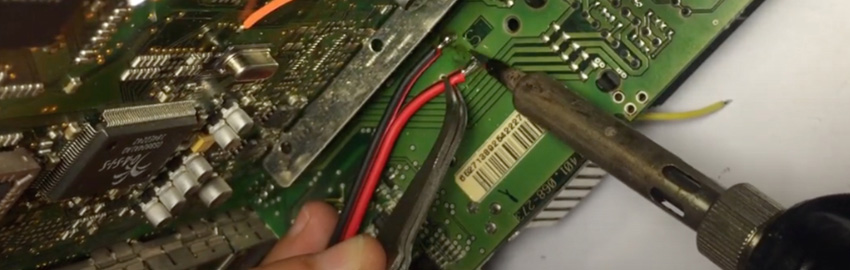
Figure 1. Adopting AI requires more than training sessions; it requires changing daily work habits.
The Trigger Method: Attaching AI to Tasks You Already Do
The engineers I work with who actually adopt AI don't have more willpower or more time. They have better triggers.
A trigger is a task you already do that signals "now use AI." Instead of trying to remember to use AI at some point in your day, you attach it to specific moments already in your workflow. The trigger happens; the AI habit follows.
Here are five manufacturing triggers that work:
Trigger 1: Before every meeting. When you see a meeting on your calendar, use AI to prepare. This is the easiest habit to start because meetings are unavoidable (for now...) and preparation is often skipped. Before your next meeting, paste your notes or the agenda into AI and ask: "What are the three questions I should be ready to answer?" or "Summarize what I need to know about this project in 30 seconds."
It takes two minutes and saves you from getting caught off guard.
Trigger 2: When you open an ECO. Every time you review an ECO, use AI to summarize it first. ECOs are dense. Instead of reading the full document cold, paste the content into AI and say: "Summarize this ECO in three bullet points: what's changing, why and what I need to verify." You'll catch the key issues faster and know where to focus your review. (A note on data handling: verify your company's policy before pasting proprietary documents into external AI tools. Enterprise plans from major providers keep your data private and won't use it for training.)
Trigger 3: When you get a technical question you can't answer immediately. Before searching Google or calling a colleague, try AI first. This is the habit that builds fastest because it replaces an existing behavior. When someone asks, "What's the recommended copper weight for 20-amp traces?" or "Can we use ENIG for this automotive application?"– start with AI. Use the context control techniques from our last article. You might still verify with a datasheet, but AI gives you a starting point in seconds.
Trigger 4: After every customer call or vendor visit. Within 15 minutes of hanging up or walking them out, capture it in AI. "Summarize this conversation: [paste your notes]. Format as: key decisions, action items, and follow-up needed." This creates documentation you'd never write otherwise and builds a searchable record of customer interactions.
Trigger 5: When you're stuck. Any time you stare at a problem for more than five minutes, explain it to AI. This is the most powerful habit because it turns frustration into a trigger. Stuck on a yield issue? Describe it to AI. Stuck on how to phrase an email? Ask AI for a draft. Stuck on what's causing the solder defects? Walk AI through what you've already eliminated.
The act of explaining the problem often clarifies it – and AI might suggest something you hadn't considered.
Picking Your First Trigger
Don't try all five. Pick one. Whichever feels easiest.
Write it down: "Every time I [trigger], I will use AI to [action]."
That's it. One trigger, one habit, one week. Master that before adding another.
Research published in the European Journal of Social Psychology found that forming a new habit takes an average of 66 days. Simple habits, like a two-minute morning prompt, can stick in as few as 18 days. And the same study found that missing a single day didn't derail the process. Consistency matters, but perfection doesn't.
The more real-world experience you bring to these conversations, the better they work. Whether you have five years or 30, the context from your actual work environment is exactly what transforms AI's generic patterns into actionable answers.
The engineers who successfully adopt AI don't do it by being smarter or working harder. They do it by making AI use inevitable. When the trigger happens, the habit follows. Not a decision to engage in the first place.
From Personal Habit to Team Adoption
Here's what happens once you've built your first AI habit: someone notices.
Maybe it's during a meeting when you pull up a summary you created in seconds. Maybe it's when you answer a technical question faster than expected. Maybe it's when a colleague walks by and sees you talking to an AI instead of digging through files.
"How did you do that?" they'll ask.
This is the moment that matters more than any training program. Because when a peer shows another peer how they use AI – in their actual work, solving actual problems – adoption happens organically.
I call this the "show, don't tell" approach to team AI adoption. And it's far more effective than mandated training for one simple reason: people trust demonstrations from colleagues more than presentations from vendors or executives. You cannot learn AI by having someone else do it for you.
How demonstration spreads adoption:
- It's contextual: When you show a colleague how you used AI to prep for a customer call, they immediately see how it applies to their customer calls. No translation required.
- It's credible: If you – someone with the same job, the same constraints, the same skepticism – are using AI and getting results, then maybe they can too.
- It's low-pressure: A 90-second hallway demo doesn't require a training budget, a calendar block, or permission from management. It just happens.
- It includes the struggles: When you demonstrate, you naturally share what didn't work. "I tried asking it this way first and got garbage. Then I added more context and got something useful." That honesty builds trust and sets realistic expectations. Next time someone asks how you did something with AI, don't just answer. Take 60 seconds to show them:
-
- "Here's the prompt I used – notice I gave it context about our specific equipment."
- "This is how I verified the answer wasn't hallucinated."
- "I do this every time I [trigger]. It's become automatic."
You're not training them. You're just showing them what works for you. They'll decide whether to try it themselves. Most will.
This is what I mean by "teach your team to automate." Not formal training sessions. Not mandated AI usage policies. Just people showing other people what's possible, one conversation at a time. Our company does this with others day in and out. Create a capability in the company.
The organizations that adopt AI fastest aren't the ones with the biggest training budgets. They're the ones where individuals build habits first, then share them naturally with their teams.
A note for leaders. If you manage a team, resist the urge to mandate this. Build your own trigger habit first. When your team sees you using AI before meetings and answering questions faster, they won't need a training program. They'll ask you to show them. BCG's 2025 survey of over 10,000 employees found that when leaders demonstrate strong support for AI, employee positivity jumps from 15% to 55%. Leading by doing beats leading by memo. You cannot delegate the adoption of AI.
Your First Daily Habit: The Morning Production Review
Let me give you a specific habit you can start tomorrow morning. This one works for designers, fab managers and anyone who needs to know what happened overnight before diving into their day.
The Trigger: You've walked the floor, then poured your first coffee and opened your laptop.
The Habit: Before checking email, paste your overnight production notes or quality alerts into AI and ask for a summary.
Here's the prompt template:
CONTEXT: I'm a [your role] at a [type of facility]. I need to quickly understand what happened overnight before my morning standup.
Here's the overnight production summary / quality alerts / shift handoff notes:
[Paste your notes, emails, or system alerts here]
INTERVIEW: "Ask 3 more questions to provide more context to accomplish the task, only as one question at a time."
TASK: Give me a 60-second briefing I can use in my morning meeting:
- What are the 2-3 most important things that happened?
- What requires my attention today?
- What can wait?
Keep it brief. I have 5 minutes before standup.
Instead of scrolling through a dozen emails for 15 minutes, you'll paste your notes into AI and have a prioritized summary in under two minutes. You'll walk into a standup knowing exactly what matters. And you'll have started your day with AI – not as an afterthought, but as your first tool.
For design engineers, the same approach works when you're stuck on a signal integrity question. Try this variation:
CONTEXT: I'm a PCB design engineer working on a 6-layer stackup for a consumer product with DDR4 running at 3200 MT/s. I'm seeing impedance mismatches on my clock traces.
Here's what I know:
- Stackup: [paste your layer stack details]
- Trace width/spacing: [your current values]
- Dielectric material: [your laminate]
INTERVIEW: "Ask 3 more questions to provide more context to accomplish the task, only as one question at a time."
TASK: Help me think through this:
- What are the most likely causes of impedance mismatch with this stackup?
- What trace geometry adjustments should I consider?
- What should I check in my SI simulation results?
I'll verify everything against my field solver, but I need a starting point.
You're not trusting AI to do your signal integrity work. You're using it to organize your thinking and make sure you haven't missed an obvious variable before you spend two hours in your simulation tool.
How to track your progress. For the first week, keep a simple tally. Each morning, mark whether you did the prompt or skipped it. Don't judge yourself – just track. By day five, you'll know whether this habit is sticking. By week two, it should feel strange to skip it.
That's how habits form. Not through willpower, but through repetition until the new behavior becomes the default.
What You Do Tomorrow
Here's the challenge, and it comes with a built-in accountability mechanism:
- Pick one trigger from this article. The morning production review is easiest, but any of the five triggers will work.
- Tell one colleague. Not a big announcement – just mention it. "I'm trying this thing where I use AI every morning before email. I'll let you know if it works."
That's it. That's the commitment.
Here's why this matters: When someone knows you're trying something, you're far more likely to actually do it. And when they ask, "How did that AI thing go?" three days from now, you'll need an answer. Psychologist Robert Cialdini's research on commitment and consistency shows that people who make public commitments follow through at dramatically higher rates. In one study, 95% of people who made a simple verbal commitment to watch over a stranger's belongings intervened when a staged theft occurred, compared to just 20% who hadn't made such a commitment. A small public statement changes behavior.
This isn't a productivity hack. It's how habits actually get built. You need a trigger, a routine, and accountability. The trigger is your daily task. The routine is the AI prompt. The accountability is the colleague you told.
The progression:
- Week 1: Do your trigger habit 3-5 times
- Week 2: It should feel weird to skip
- Week 3: It's automatic – now you can add a second trigger
- Week 4: Someone asks, "How did you do that?" and you show them
That's the path from knowing about AI to actually using AI. And from using AI yourself to teaching your team.
In the next article, we'll take these habits and turn them into something more powerful: automated workflows that run without you having to think about them. That's when AI moves from a daily tool to a competitive advantage.
But you can't automate what you haven't mastered manually. So start with the habit.
Tomorrow morning. One trigger. One colleague. Go.
About This Series
This is the third article in a series exploring practical AI adoption for PCB design and manufacturing professionals. With this article, we complete Pillar 1 of the Three Pillars of AI Maturity: building foundational AI skills and daily habits.
Article 1: Building Relationships with Technology (Why personal capability beats purchased solutions)
Article 2: AI ‘Hallucinates.’ Why That’s Actually Good News. (How to get reliable, specific outputs from AI)
Article 3: Why Your AI Training Isn’t Sticking (Turning knowledge into daily habits) ← You are here
Coming Next: From Chat to workflow. Now that AI is part of your daily routine, we'll turn those habits into automated workflows that run without you having to think about them. That's when Pillar 2 begins.
This isn't about buying AI solutions. It's about developing your team's AI capabilities.
We can help.
Sean Patterson is an accomplished executive with extensive C-suite experience across CRO, COO, and CTO roles who now specializes in humanizing artificial intelligence implementation in business environments, particularly manufacturing; This email address is being protected from spambots. You need JavaScript enabled to view it..
Patterson’s unique approach to AI implementation stems from his multifaceted leadership experience in the PCB industry, including serving as COO and CTO & head of AI at Summit Interconnect, various senior positions at TTM Technologies, and CRO of Nano Dimension. He built Amazon’s tractor trailer division and healthcare platforms. He currently serves as COO of StartGuides, providing military technology working backwards from the soldier. He is also on several nonprofit AI advisory boards in education.
Patteson brings practical insights into how PCB manufacturers can approach AI adoption strategically. His methodology emphasizes cultural adoption from the top, employee empowerment, and then automation. His approach to AI implementation is captured in his often-quoted principle: “AI adoption is not something a leader can delegate.”
Patterson holds a master’s in nuclear science and engineering from MIT and a bachelor’s in systems engineering with a focus on robotics from the United States Naval Academy.