IPC-2581 replaces fragmented PCB data handoffs with a single intelligent file.
For decades, the electronics industry has accepted a painful reality: design data handoffs are messy, incomplete and almost always require follow-up emails, spreadsheets and PowerPoints to clarify intent. We’ve normalized inefficiency.
But here’s the real question: Why are we still working this way in an AI-driven world?
There is a smarter path forward – and it’s called the IPC-2581 standard. And the IPC-2581 Consortium is here to assist in your migration process.
IPC-2581 is not just another file format. It is:
- The only open and neutral standard on the market
- An AI-ready PCB data standard
- A complete machine-readable digital product model
- A single-file solution that eliminates fragmented packages.
Everything needed to fabricate, assemble and test a PCB can exist in one intelligent XML file (Figure 1). No reverse engineering. No guessing. No reconstructing intent. Just build-ready data.

Figure 1. From reverse engineering and email chaos to an intelligent digital product model.
Why IPC-2581 Makes Sense Today
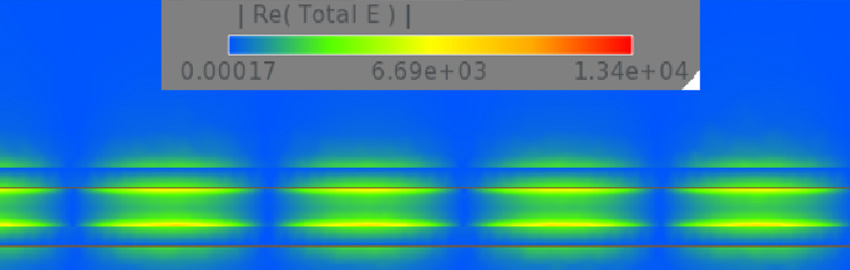
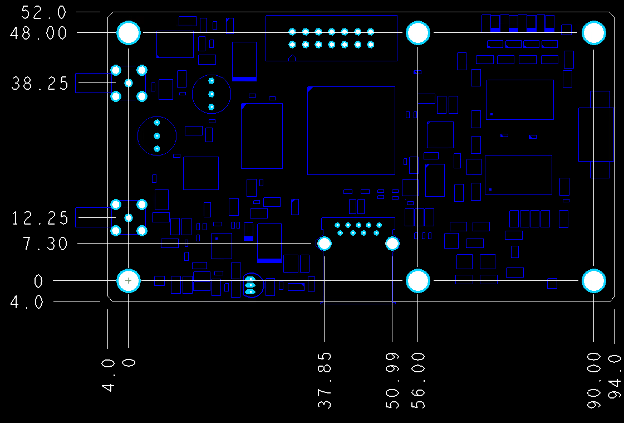
- Complete machine-readable data. IPC-2581 includes fabrication, assembly, test, stackup, impedance, drawings, dimensions – everything – in a structured format tools can interpret automatically (Figure 2).

Figure 2. IPC-2581 consolidates netlist, drill, BOM, test and documentation data into a single XML file.
This is critical in an AI era. AI agents cannot efficiently process fragmented, partially reconstructed data. Even if the AI agent could reconstruct it, can you depend on it? IPC-2581 gives AI what it needs: clean, structured intelligence. Some companies are using AI tools to analyze the data (DfM, etc.) before sending it to their manufacturing partners. Others use IPC-2581 to send design data to analysis tools to ensure the circuit will work as intended. Wouldn’t you want to build what you simulated/tested?
- Single file with zero confusion. Alternative formats still rely on multiple files and definitions. IPC-2581 consolidates everything into one file, which means simpler data management, easier archiving, cleaner PLM integration and no missing attachments.
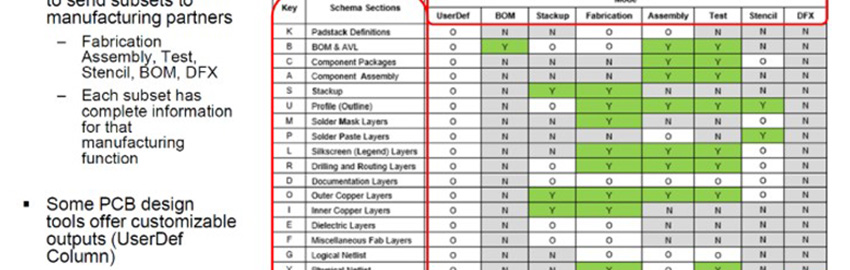
- IP protection through function modes. One of IPC-2581’s most powerful capabilities is Function Modes (Figure 3). It outputs fabrication-only package, assembly-only package, stencil-only package, and more. Many software vendors support additional function modes, and some allow creation of a user-defined mode that includes or excludes data of your choice. (Read more about it here.) Manufacturers receive only what they need – nothing more. This protects intellectual property while enabling precise manufacturing collaboration.

Figure 3. IPC-2581 Function Modes enable controlled data exchange by tailoring fabrication, assembly, test, stencil and DfX outputs.
- True bidirectional exchange. This is where IPC-2581 truly stands apart. With its DfX module and stackup exchange, feedback becomes electronic and structured – not ePaper (spreadsheets, PowerPoint, emails, etc.). IPC-2581 is the only true bidirectional standard, sidestepping the drawbacks of traditional one-way handoffs. IPC-2581C introduced the DfX module, which permits electronic exchange of DfM data and TQs. This module can either accompany the complete set of design data or be distributed on its own, in a manner similar to stackup information.
The latest IPC-2581 release (version 4.0) enhances the DfX module capabilities, thanks to feedback from IPC2581 Consortium and IPC 2-16 committee members. By adopting the DfX Module, designers and manufacturers can finally eliminate ePaper – no more emails, Word docs or PowerPoint slides – saving time and reducing errors (Figure 4). Better, the contextual data exchanged can be analyzed by AI agents to recommend process improvements and minimize unnecessary iterations. Design teams can compare changes across sources, while manufacturers can pinpoint which customers consume the most time, and incentivize better collaboration. This streamlined process accelerates new product introduction and creates a genuine win-win for everyone involved.

Figure 4. IPC-2581 replaces fragmented, one-way DfM handoffs with a structured two-way digital exchange.
For DfM/TQs, design and manufacturing tools can:
- Send technical queries electronically
- Link issues directly to coordinates and objects
- Track approvals and rejections
- Store approved DfM inside the design file
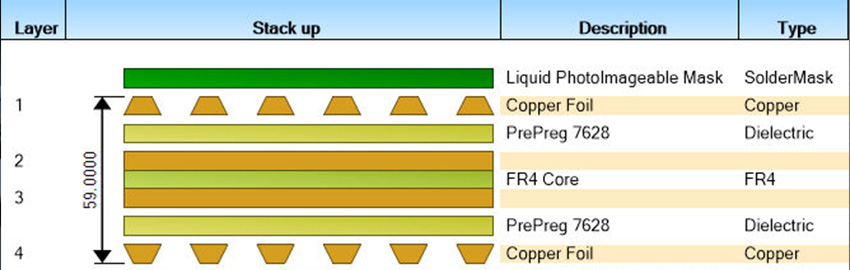
For stackup exchange, design and manufacturing tools can send stackup data that are electronically read in, eliminating manual stackup data entry on the design side. Manufacturers can send exact material information to the design, which can then perform an accurate simulation for high-speed signals.
No more manual correlation work. No more spreadsheets. No more error-prone back-and-forth. Free PCB designers and manufacturing engineers to do real work.
Real Industry Support
IPC-2581 is supported by all major EDA vendors (Altium, Cadence, KiCad, Pulsonix, Siemens and Zuken, among others). On the manufacturing side, companies using software from these companies can seamlessly read IPC-2581:
- Frontline /KLA Tencor (Genesis 2000, InCAM, InSight PCB)
- Downstream/Siemens (CAM350)
- Aegis Software (FactoryLogix, CircuitCAM)
- Wise Software (VisualCAM, Wise2581 Viewer)
- Siemens (TestExpert, UniCAM FX, UniDoc FX)
- Vayo (VayoPro – DfM, SMT, Test Expert)
- A complete list of software companies that support IPC-2581 is available.
The IPC-2581 Consortium (ipc2581.com) was formed in 2011 with 12 founding members. Today, it has grown to over 141 members, including:
- OEMs such as Apple, Intel, Cisco, NVIDIA, Amazon, Ericsson
- Fabricators
- Contract manufacturers
- EDA and CAM suppliers
- PLM and analysis software providers.
The support matrix on ipc2581.com is updated based on information received from manufacturers or their customers reporting support for IPC-2581. Many more companies support IPC-2581 than are listed in the matrix. Contact your manufacturer and ask them to support your desire to move to IPC-2581. Often, the consortium has found that the manufacturers’ sales and marketing teams may not know whether the factory supports IPC-2581. Visit ipc2581.com to see the growing support matrix.
Who Is Actually Using It?
This is not theoretical.
During one of the IPC-2581 Adoption Summits, one fabricator reported more than 2,300 boards were built using IPC-2581 as input since 2018. This remarkable figure demonstrates the growing acceptance of the standard while underscoring the reliability and effectiveness of the IPC-2581 standard in high-volume manufacturing environments.
Aegis Software, which provides MES software for manufacturing companies, further emphasized this trend, sharing that 33 companies, including large multinational contract manufacturers and smaller enterprises, have successfully integrated IPC-2581 into their workflows. These numbers highlight the growing recognition of IPC-2581 as a standard that meets the needs of manufacturers of all sizes.
Axiom Electronics noted that IPC-2581 is its preferred format and has been helpful in streamlining its paper-free factory process. A significant number of its customers have been providing IPC-2581 as input for building boards for many years now.
Cisco standardized on IPC-2581 last year and now requires all suppliers to support it for fabrication and assembly. They migrated from Gerber-based packages to an intelligent, open standard IPC-2581 file for design data exchange. IP Protection was their number #1 reason to move to IPC-2581. Having bi-directional stackup exchange and electronic DfM/TQ exchanges improves efficiency. IPC-2581 is also AI-ready compared to any other package available today.
“We made a strategic decision to protect our intellectual property and eliminate inefficiencies in our supplier interactions by transitioning from Gerber-based handoffs to IPC-2581 bidirectional data exchange,” said Terry Hoffman, senior technical leader, Cisco. “IPC-2581 provides a single, intelligent, and consistent digital product model – everything our suppliers need to build, assemble and test our PCBs. It removed the ambiguity, eliminated multiple disconnected files and replaced guesswork with precision.”
Apple joined the IPC-2581 Consortium last year and drove several enhancements to the standard's latest version – Version 4.0 (new naming convention). It felt it could influence and drive the standard to meet its needs.
Intel joined the IPC-2581 Consortium a month ago and is actively participating in the consortium meetings to drive the standard. Its reason for joining: “Intel believes in open, vendor-neutral industry standards and would like to drive the standard for automated AI-enabled board design workflows and data exchange that will accelerate innovation in electronics design and manufacturing.”
Dana Korf, senior technical director at Victory Giant (VGT), summarized it best: “In reality, most traditional data packages are not manufacturing-ready when they arrive. IPC-2581 dramatically changes that – eliminating conflicting documentation, data and netlist errors which significantly reduces NPI cycle times.”
That says it all.
Why This Matters Now
We talk about:
- Digital transformation
- Smart factories
- AI-driven DfM
- Secure data exchange
- Faster NPI.
None of this scales on top of fragmented, reverse-engineered, one-way handoffs.
IPC-2581 enables:
- AI-ready data
- Secure IP exchange
- True bidirectional collaboration
- Reduced errors
- Faster product introduction
- Paperless manufacturing.
This is not just about file format. It is about transforming how our industry works.
If the industry already supports it … if OEMs are standardizing on it … if it reduces errors, protects IP and accelerates NPI … what are you waiting for?
Move to IPC-2581 and leave chaos behind. Reach out to the IPC-2581 Consortium (This email address is being protected from spambots. You need JavaScript enabled to view it.) with questions or for assistance on using or migrating to the IPC-2581 format.
Hemant Shah is an EDA veteran and chair of the IPC-2581 Consortium (ipc2581.com). Shah led the effort to create an industry-wide consortium of design and supply chain companies to get IPC-2581 – the standard for transferring PCB design data to manufacturing – adopted.
He spent 20 years at Cadence as product manager for various PCB design products. Shah also led the industry adoption of the IBIS-AMI algorithmic modeling standard. Prior to joining Cadence, Shah worked at Xynetix and Intergraph. He is passionate about developing and marketing leading-edge software products for PCB design.